Beauty AI is graduating from filters and recommendations to biological discovery
Outer Biosciences and the shift from beauty recommendation to biological discovery
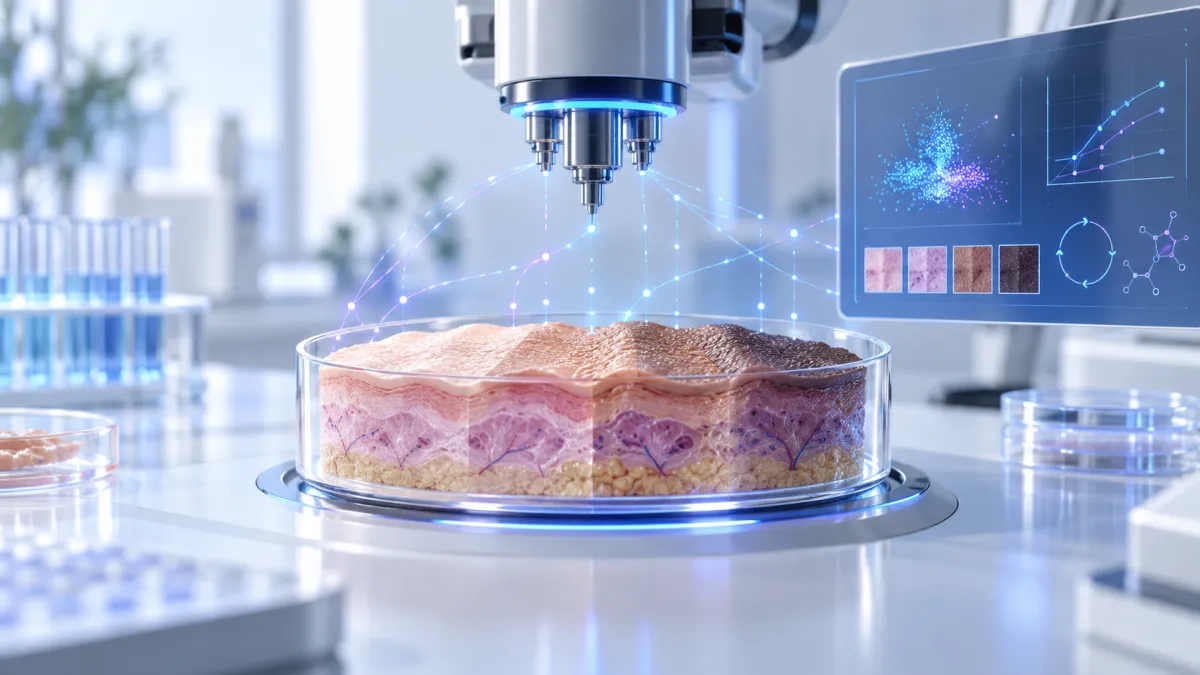
Yuna combines living human skin, automated screening, and machine learning. Its most interesting characteristic is the feedback loop: AI proposes potentially useful compounds, tissue testing produces biological evidence, and those results improve subsequent predictions.
Problem addressed: Traditional skin-product discovery can rely on models that do not preserve the complexity of living human tissue for long enough to study slower biological responses.
Likely users: Skincare manufacturers, pharmaceutical companies, ingredient developers, dermatology researchers, and eventually aesthetic-device or post-procedure-care companies.
Potential impact:
Faster prioritization of promising ingredients
Better differentiation for scientifically supported products
Fewer weak candidates entering expensive development stages
Stronger educational content for providers and consumers
Potential licensing and research-partnership revenue
Patient and marketing implications: Better evidence could improve treatment-support recommendations. It could also fuel aggressive claims before validation is mature.
Risks: Tissue sourcing, consent, representativeness across skin types, reproducibility, algorithmic bias, regulatory classification, and the gap between laboratory response and real-world outcomes.
Realistic experiment: A med spa should not attempt biological research. It can test the same feedback-loop principle:
Select one treatment.
Standardize photography and follow-up timing.
Track treatment settings, products used, reported side effects, satisfaction, and repeat booking.
Review the results monthly by skin type and treatment protocol.
Use findings to improve consultation education, never to make unsupported medical claims.